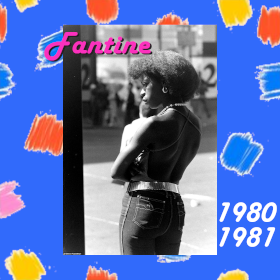
Fantine 1980 - 1981
In
Mix
- Edge of 17 - Stevie Nicks
- Good Times - Chic
- The Winner Takes it All - ABBA
- Face to the Wind - Grace Slick
- Working Class Hero - Marianne Faithful
- Bad Reputation - Joan Jett
The storm hangs like a dagger to cut me in the heart
But still I stand, face to the wind
Liner Notes
The album cover was photographed by Sheldon Nadelman while working at Terminal Bar on 41st Street and 8th Ave, New York. Photos between 1973 and 1982 show sex workers and homeless people around Port Authority bus terminal. The subject of the photo's identity was not recorded. Font and colours riffing off the Bad Girls single by Donna Summer.
Fantine is probably 18 when she begins going with Tholomyes, and is abandoned at 21. I love Edge of Seventeen's determined pulse of grit and fragility. When choosing songs for Fantine's album, I also wanted to think of iconic women in music from this time, to give listeners a mental image of the subcultures of the period. I didn't manage to use Chaka Khan's
The backbone of Chic are in fact the guitar and bass, creating that funky core for a series of frontwomen - classic disco at the height of its refinement in 1979, likely the year Tholomyes and Fantine began dancing together. In contrast to the wealth of political soul, funk & other genres during the 60s, disco is predominantly apolitical in lyrics - helping to form the impression that the 70s was an apolitical decade. This was untrue - in many ways the 70s attempted to put into practice the dreaming of the 60s - but Good Times is a perfect evocation of this trend in music, and for Fantine and Tholomyes' apolitical friendship set.
Unfortunately, ABBA's Waterloo was not released in our parallel Waterloo year, but The Winner Takes It All is one of the largest heartbreak songs of all time and, for Fantine's economic situation, not merely a metaphor. Grace Slick is a new artist to me I discovered through this project. You could easily imagine both songs being belted out by a musical artiste with a blonde wig.
Another guide for choosing songs was